Overload protection of motors

Overload protection of motors

Before you knowing about overload protection check out the post about contactors link given below

what is contractors

Overload protection prevents an electric motor fromdrawing too much current, overheating, and literally burning out

How Motors Work?

A motor goes through three stages during normal operation: resting, starting,

A motor at rest does not require current because the circuit is open. But once the circuit is closed, the motor starts generating a tremendous input current; up to 6-8 times its operating current. Here’s the problem: this large input current can cause the immediate trip of the circuit breaker. A fuse or circuit breaker sized to handle the normal operating load of the motor will open the circuit during start-up. You might think that sizing the fuse or circuit breaker for the peak in current consumption would solve the problem. But if you did this, once the engine was running, only the most extreme overload would open the circuit. Minor overloads would not trip the switches, and the motor would shut down

What Is An Overload?

The term literally means that too much load has been placed on the motor. A motor is designed to run at a certain speed, called its synchronous speed. If the load on the motor increases, the motor draws more current to continue running at its synchronous speed. It is quite possible to put so much load on a motor that it will draw more and more current without being able to reach synchronous speed. If this happens for a long enough period of time, the motor can melt its insulation and burn out. This condition is called an overload.

Because of the way a motor works, an overload protection device is required that does not open the circuit while the motor is starting, but opens the circuit if the motor gets overloaded and the fuses do not blow.

Overload relay

The overload relay is the device used in starters for motor overload protection. It limits the amount of current drawn to protect the motor from overheating.

An overload relay consists of:

  • A current sensing unit (connected in the line to the motor).
  • A mechanism to break the circuit, either directly or indirectly.

To meet motor protection needs, overload relays have a time delay to allow harmless temporary overloads without breaking the circuit. They also have a trip capability to open the control circuit if mildly dangerous currents (that could result in motor damage) continue over a period of time. All overload relays also have some means of resetting the circuit once the overload is removed

Overload relay types:

  • Eutectic (melting alloy)
  • Bimetallic
  • Solid State

1.The Eutectic Overload Relay

The fusion alloy (or eutectic) overload relay consists of a heating coil, a eutectic alloy, and a mechanical mechanism to activate a triggering device when an overload it happens The relay measures the motor temperature by controlling the amount of current that is drawn. This is done indirectly through a heater coil. There are many different types of heater coils available, but the operating principle is the same: a heater coil converts the excess current into heat that is used to determine if the engine is in danger. The magnitude of the current and the the time that is present determines the amount of heat registered in the heater coil.

Usually, a eutectic alloy tube is used in combination with a ratchet wheel to activate a tripping device when an overload occurs. A eutectic alloy is a metal that has a fixed temperature at which it changes directly from a solid to a liquid. When an overload occurs, the heater coil heats the eutectic alloy tube. The heat melts the alloy, freeing the ratchet wheel and allowing it to turn. This action opens the normally closed contacts in the overload relay.

2.The Bimetallic Overload Relay

A bimetallic device is made up of two strips of different metals. The dissimilar metals are permanently joined. Heating the bimetallic strip causes it to bend, because the dissimilar metals expand and contract at different rates. The bimetallic strip applies tension to a spring on a contact. If heat begins to rise, the strip bends, and the spring pulls the contacts apart, breaking the circuit,

Once the firing action has taken place, the bimetal strip cools and reshapes in itself, automatically restarting the circuit. The motor restarts even when the overload it has not been erased, and it will fire and restart again and again. (This assumes an automatic restart This type of relay can also be equipped with a manual reset).

The Solid State Overload Relay

Unlike the other two types of relays, the solid state overload relay does not generate heat to facilitate a trip. Instead, measure the current or a change in resistance. The advantage of this method is that the overload relay does not waste energy that generates heat and does not increase the cooling requirements of the panel.

The current can be measured through current transformers, then it becomes a voltage which is stored in the memory inside the overload relay. If the relay notices that the the current is higher than it should be for a too long period of time, it shoots up. Another type of solid state overload relay uses sensors to detect the heat generated in the engine When the sensor also detects heat above the preset value for a long period of time, it shoots up.

The solid state overload relay also provides some advanced functions.

  1. It is possible to provide proactive functionality and improved protection against special conditions. For example, when the conditions of high ambient temperature exist, devices that use sensors can detect the effect of room temperature taking in the engine.
  2. Some solid state overload relays offer programmable trip time. This could be Useful when a load takes longer to accelerate than traditional overload relays will allow, or when you want a travel time between traditional travel classes.
  3. Some overload relays have a built-in emergency override to allow the motor to start even when you could damage the engine to do it. This could be useful in a situation where the process is more important than saving the engine.
  4. Some solid state overload relays can detect the change in current when an engine suddenly it is downloaded. In such situation, the relay will trigger to notify the user that there is an application problem. Normally, this indicates a system problem instead of a motor problem.
What is a transformer and what are its uses? How does a transformer work

What is a transformer and what are its uses? How does a transformer work

What is a Transformer

A transformer is a static equipment, with two or more windings linked to a common magnetic field. By using electromagnetic induction this device will transfer electrical energy from one circuit to another without any frequency change.

  • Real and ideal transformer 34
  • Toroidal transformer 4
  • Transformer losses and how to reduce it, Efficiency of a transformer 9
  • How transformer is constructed 15
  • Instrument and audio transformer 4
  • Distribution transformer 5
  • Control transformer 4
  • Transformer faults and how to protect the transformer from these faults 4
  • Current transformer and its types 2
  • Voltage transformer 3
  • Auto transformer 3
  • Power transformer 1
  • Isolation transformer 6
  • Transformer cooling 1
  • Three phase transformer 3
  • How to test a transformer 4
  • Grounding transformer 3
  • Pulse transformer 3
  • Furnace transformer
  • Transformer protective devices 4
  • Auxilary current transformers 4
  • Instrument and audio transformer 3

What are the functions of a Transformer

• It changes the voltage level

• It changes the current level

• It changes the impedance

• It can provide isolation

• Filters DC from a waveform that is a mixture of AC and DC

How does a transformer work

A transformer has two electric circuits called primary and secondary, a magnetic circuit provides the link between the primary and the secondary. Alternating current is supplied to one of the winding and when the current will reach the electric coil there will be an alternating flux surrounded to that coil so if we bring another coil near to the first one then there will be an alternating flux linkage with that second coil and so there will be rate of change in flux with respect to time in the second coil and thus EMF will be induced in it.

What is the use of a transformer

Transformer plays a major role in power transmission, transformers are used to increase the voltage before transmitting electrical energy over long distance through wires. Step-up transformer will decrease the current to keep the power into the device equal to the power out of it. In power stations the power is generated at the voltage of 12KV to 25KV, transformers are used to step up this voltage between 110KV to 1000KV for transmission over long distance with a small loss. Step down transformer is used to decrease the voltage for local distributions such as in homes, factories, and offices as low as 120V.

Types of service

Power transformer

• These transformers are used in generating stations and these are above 500 KVA

• They have maximum efficiency near full load

• Iron losses are 5-6 times when compared to distribution transformer

Distribution transformer

• It is used in the distribution section and they are up to 500 KVA

• They are operated for 24 hours

• It has maximum efficiency near 50% of full load

What are the major parts of a transformer

• Core

• Windings

• Transformer tank

• Conservator

• Breather

• Cooling arrangements

• Tap Changer

• Bushings

• Accessories

Core

The cores of the transformers are made from a special type of iron. Iron cores are used to reduce the reluctance of flux path, and because of that only a small amount of current is required to induce flux. The cores won’t be made up of a solid block of iron. Because the solid core would act as a short-circuited turn. High circulating currents will be formed in the core because of the solid core, and that would result in high losses. These circulating currents are called eddy current loss, and it can be reduced by laminating the transformer cores next to each other and each lamination will be insulated from others. Core construction is of two types they are core form type and shell form type. In the core form type, the windings are constructed around the laminated cores. In case of the shell form type, the laminated core is constructed around the windings

Parts of a core

The part which carries transformer windings is called legs and the part which connects the legs, which also closes the magnetic circuit is called yokes.

Windings

The winding is the electrical circuit of the transformer, it is made up of highly conducting copper with high dielectric strength.

These winding needs to be strong mechanically and electrically to withstand both over-voltage and mechanical stress.

Dielectric circuit

It consists of insulation used at different places in a transformer all the magnetic and conducting part of the transformer must be insulated well.

Major insulation

This insulation is between the core and low voltage winding and similar insulation is used for low and high voltage winding.

Minor insulation

It is done between the elements of a given winding, insulating turns, layers, coil, conductor.

Transformer tank

It provides a protective cover to the core, it provides an external surface for heat dissipation, it is filled with insulating oil for placing core and coil assembly. It does the protection of the windings and other internal parts.

Conservator

It is a cylindrical metal drum, the main function of the conservator is to keep the main tank of the transformer completely filled with oil in any circumstances. It takes up the contraction and the expansion of transformer oil and keeps the main tank full of oil and it reduces the rate of oxidation of the oil because less, oil surface is exposed to the air and thus the sludge formation can be reduced mostly the capacity of the conservator is nearly 10 to 12 percent of the volume of oil of the main tank.

Installation procedure for Motor Control Center (MCC)

Installation procedure for Motor Control Center (MCC)

Here we discuss the installation procedure for MCC panel.

Using the crane/fork lift, MCC panels 21 must be carefully removed from the vehicle and moved to the correct storage location. Items found inappropriate for the project shall be immediately removed from the site.

MCC panels shall be stored separately in a protected position as specified by the manufacturer for the ambient condition. Factory packing of MCC panels shall be removed only at the place of installation to prevent damage.

Installation procedure for MCC panel:

  • The exact location of the panel and the fixing holes to be located on the concrete plinth given for the installation by the main contractor
  • Remove the packing and ensure that the panel is free from transportation damages
  • In the case of wall-mounted panels, the exact location of the panel and the fixing holes to be identified on the basis of approved shop drawings shall be installed in an approved manner.
  • Provide fixing arrangement in an approved manner in the marked location.
  • Place the panel on the plinth, correctly align
  • Gland the cables on the panel’s gland plate (power / earthing) and finish properly.
  • All the connections should be tightened
  • Entry around the panel to be reviewed in compliance with the regulations for future maintenance.
  • Ensure that the services contain water away from the panel or are adequately protected from accidental leakage.
  • Panel identification and outgoing breaker identification shall be contrary to approved shop drawings.
  • Incoming and outgoing cables are marked / identified according to the authorised drawings of the store.
  • All panel components such as MCCB, MCB, Relays, Fuses, Meters, CTs, Contractors, Terminals, etc. shall be tested for correct rating and size against the approved panel drawings.
  • The supplier of the specific switchgear must perform any internal connections / modifications.
  • All breakers (incoming / outgoing) must be in the “OFF” role and must be locked in order to prevent mishandling.
  • Check and ensure adequate space is available for maintenance.
  • To prevent dust and contamination, the panel must be properly cleaned and protected after installation.
  • A request for inspection shall be submitted for verification of QA / QC 10. Work inspection request shall be submitted for inspection and sign-off by the consultant.

How to set parameters for ABB ACS880 drive

How to set parameters for ABB ACS880 drive

This drive has a new panel while compared to the previous version of ABB ACS800, this device also has a bigger LCD display. It also has a USB port so we can connect a PC to this.

First press the local remote key to, do the local operation in the below image we can see a button on the top right side it can be used to select the menu. By using the same button we can also choose the parameter too and it is shown in the below image. In order to set the parameters, we must enter the motor data so select the parameter group 99 and we can see many sub-parameters and we can enter the motor data to it. Set the parameter 9903 to the asynchronous motor and this is for induction motors. Next chose the parameter 9904 which is the motor control mode and this must be set as DTC the DTC stands for direct torque control. Select the parameter 9906 to set the motor nominal current so check the motor nameplate that is chosen to connect to the drive and after setting the parameter we must save it. Then select the parameter 9907 for motor nominal voltage and we must enter the valve that is shown in the motor nameplate.

After that select the parameter 9908 to set the motor nominal frequency and set the required frequency. Then select the parameter 9909 to set the motor nominal speed so enter the value shown in the motor nameplate and this will be in hertz. Select the parameter 9910 to set the nominal power in the motor nameplate this will be displayed in horsepower or in kilowatts. Select the parameter group 23 in order to change the acceleration and deceleration time.

Press the top left key which is seen in the panel. Select the parameter 23.12 to set the acceleration time after adding the value save it and then go to parameter 23.13 to set the deceleration time. To go back to the home menu press the top left key more than once. We can also change the speed reference by using the up and down buttons. We can also change the speed during the operation according to our need, in order to change the direction of the motor select the options in the menu.


MCC panel & smart MCCs

MCC panel & smart MCCs

MCC panel:

MCC stands for Motor Control Center which is a floor mounted assembly for motor control. The MCC contains all the motor control units, feeders for the motors 15 and blowers. They are specially designed for different motor ratings and they are available in automatic and manual operation.

An MCC is a steel structure that contains the combination of engine control units, raceways, internal wiring and busbars. A vertical section can be independent as a complete motor control centre, or several sections can be screwed and transported together.

The MCC is connected with PLC 25/DCS 12 control panels, for that large quantity of cabling and connections was necessary in conventional MCC. But it is less needed with latest smart MCCs. It receives a digital signal from the control panel and also can be operated by the field operators remote mode. The MCC produce the control action for the motor in response to the digital input.

The MCC links the digital controller with the analog field actuators. The MCC contains timers, counters, for the necessary operations.

What is the difference between Control panel and MCC?

A control panel usually consists of a controller that helps to give digital signals to the MCC panel to start the engine. They are specially designed to protect electrical equipment from heavy fluctuations in loads. These include PLC, VFD, fuses, switches; transformers and many other necessary components that are necessary to control the voltage.

While MCC is designed especially for motor operations. The MCC receives a signal from the control panel and which is used to control motor. The MCC is directly connected to the analoge motor. Thus both are incomplete without the other.

What is a Smart MCC?

An smart MCC is an intelligent device used to control motors and monitor their operation; to monitor the energy consumption, the quality of the energy and the functioning of the system; and to communicate quickly with a PLC or process control system through a data network.

Advantages of Smart MCCs:

  • Low system installation and commissioning costs
  • Low maintenance cost
  • Low energy costs
  • Reduced downtime
  • Increased system efficiency
  • Increased system information

GE invests £2.5m into Next Engineers in Staffordshire

GE invests £2.5m into Next Engineers in Staffordshire

Staffordshire is to host Next Engineers, a GE programme aimed at increasing the diversity of young people entering the engineering profession.

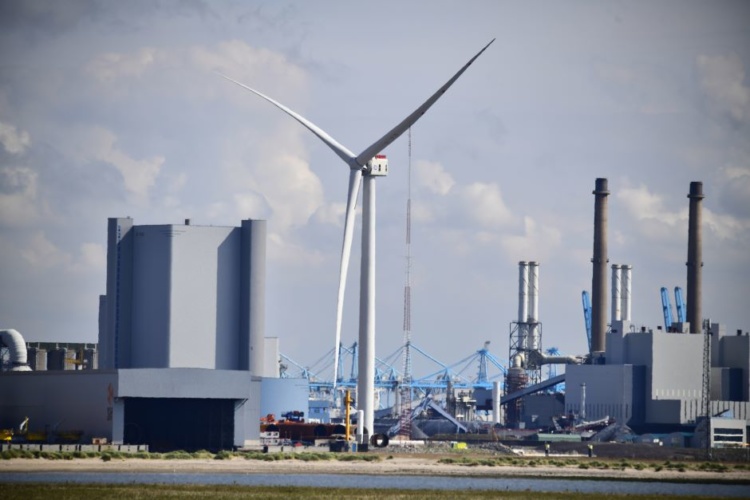
GE’s Haliade-X prototype (Image: GE Renewable Energy)

GE is investing £2.5m into the programme in Staffs where the company operates three sites that design, develop, and service products used in the power and renewable energy industries.

GE wants Next Engineers to inspire over 3,500 local students aged 13-18 by giving them first-hand experiences of engineering and awarding financial support to pursue further education in engineering.

In a statement, Kevin O’Neill, president & CEO, GE UK, said: “Our growing global economy will require more engineers to solve society’s most pressing challenges – from clean energy to quality healthcare and more sustainable flight. Next Engineers will provide a platform for Staffordshire’s young people from different backgrounds to bring their unique perspectives to engineering and help address these important issues, enthusing and introducing them to the hands-on learning experiences they will need to pursue engineering careers.”

Stafford joins Cincinnati and Greenville in the United States and Johannesburg in South Africa as an inaugural member of the programme.

Theo Clarke MP, Stafford, said: “Having an initiative like Next Engineers coming to our community is fantastic for young people locally. We were already fortunate to have a top global employer like GE in the region, but local students now have the opportunity to explore viable engineering careers that they had previously thought were unattainable. It really is an amazing opportunity for our young people.”

Next Engineers is a so-called signature programme of the GE Foundation, an independent charitable organisation funded by GE. The GE Foundation is partnering with MyKindaFuture, a UK HR tech company specialising in attracting and facilitating underrepresented talent, to implement Next Engineers in the UK.

In practise, Next Engineers will offer one-hour sessions and hands-on activities for the youngest (Year 9) students. Weeklong Engineering Camps will be run during the school holidays for those in Year 10. There will also be an Engineering Academy providing three-years of out of school coaching for Year 11-13 students. Those accepted onto engineering apprenticeships or engineering degrees will also receive a funding contribution from the GE Foundation.

The Staffordshire investment is part of a $100m, long-term, international Next Engineers programme which GE Foundation unveiled earlier this year. It is designed to reach over 85,000 students across 25 locations globally over the next decade.

Students and teachers in Staffordshire can find out more about the programme

NASA and GE collaborate on hybrid electric jet engine

NASA and GE collaborate on hybrid electric jet engine

GE Aerospace is working with NASA on a prototype hybrid electric turbofan engine that will use embedded electric motors to supplement power.

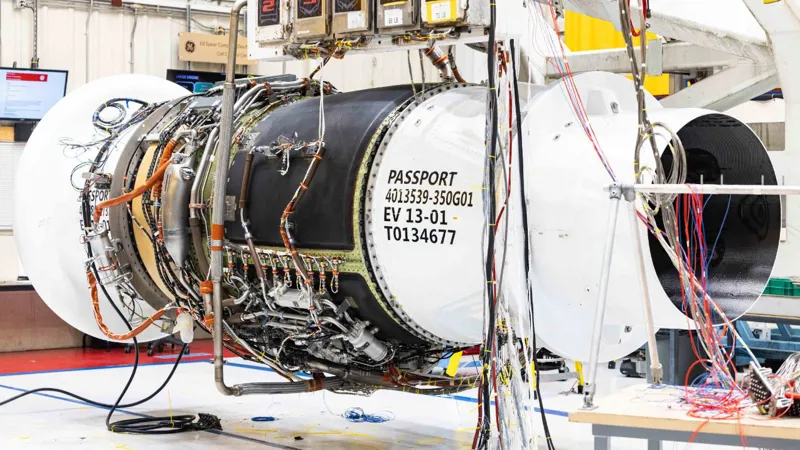
Part of NASA’s Hybrid Thermally Efficient Core (HyTEC) project, the new collaboration will see a GE Aerospace Passport engine modified with hybrid electric components. The prototype will not be reliant on energy storage. However, the partners believe the project will help advance hybrid electric aerospace technology in preparation for storage technologies maturing, ultimately helping to cut aviation emissions.

“Together with NASA, GE Aerospace is doing critical research and development that could help make hybrid electric commercial flight possible,” Arjan Hegeman, general manager of future of flight technologies at GE Aerospace said in a statement.

“We’re advancing state-of-the-art propulsion systems for next generation commercial aircraft with an important aim — to drive industry efforts to improve efficiency and reduce emissions compared to today’s aircraft engines.”

Initial component-level testing of electric motor/generators and power electronics has been completed for the HyTEC Turbofan Engine Power Extraction Demonstration. Systems testing took place at GE Aerospace’s EPISCenter in Dayton, Ohio. A baseline test of the Passport engine before hybridisation was completed at the company’s Peebles Test Operation, also in Ohio. Results of the hybrid electric component and baseline engine tests are being used to evaluate and update models in preparation for a ground test.

“Our collaborations with industry partners like GE Aerospace are paving the way for US leadership in hybrid electric commercial transport aircraft,” said Anthony Nerone, HyTEC project manager, NASA’s Glenn Research Center.

“Single-aisle aircraft are the biggest contributors to aviation carbon emissions. That’s why we’re focusing on key technologies that will enable next generation single-aisle aircraft with much greater efficiency and reduced emissions than the current fleet.”

In another NASA collaboration, GE Aerospace is developing an integrated, megawatt (MW)-class hybrid electric propulsion system as part of the Electrified Powertrain Flight Demonstration (EPFD) programme. Plans for EPFD call for ground and flight tests of the hybrid electric system this decade, in collaboration with Boeing, using a modified Saab 340B aircraft and GE Aerospace’s CT7 engines.

ABB mining robot has a blast with automated charge handling

ABB mining robot has a blast with automated charge handling

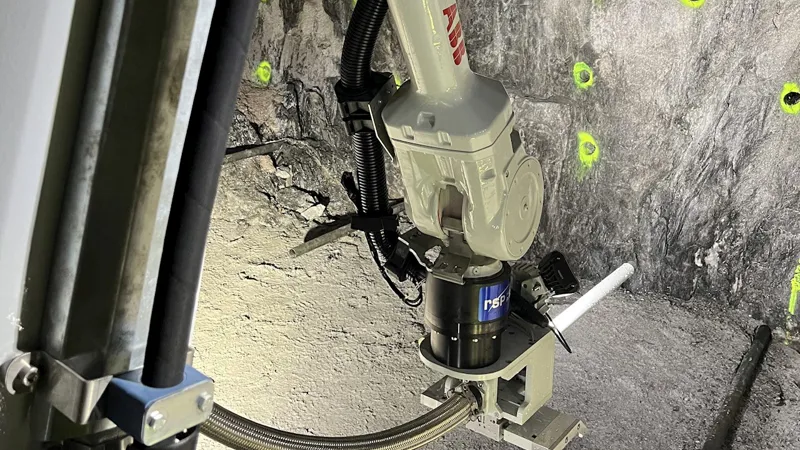
A new ABB robot that can automatically charge blasting holes in mines with explosives has been successfully trialled in Sweden.

The ABB Robot Charger uses a combination of machine vision, automation and precision robotics to identify boreholes in the rockface, then prime them with explosive charges and detonators. According to ABB, the system can be retrofitted to any truck, with the robot deployed to multiple blasting sites over the course of a day.

Blasting schedules in mines vary widely, but in some mines can take place up to 15 times per day. Currently, setting charges is one of the last remaining mining processes that is fully manual, with miners working at unsupported rockfaces. ABB said the Robot Charger will be a leap forward for mine safety, automating this potentially dangerous task.

“This is a significant technology development for ABB and the wider industry where safety is part of overall ESG commitments,” said Vedrana Spudic, head of Technology, Business Line Mining, ABB.

“The robot locates the drilled holes on the rock face using a vision system, and these recent tests show all can be reached and charged with the cycle fully automated. This removes the need for human operators in a small, unsupported area right at the face.”

According to ABB, the Robot Charger consists of four separate systems that work in tandem: a camera to scan the rockface for boreholes; a hydraulic crane to reach the full height of the space; a small industrial robot for managing the detonators and primers; and a larger industrial robot for placing the explosives in the drilled holes.

The pilot programme has been undertaken in partnership with mine operators Boliden and LKAB at Boliden Garpenberg. Located 180km northwest of Stockholm, it is claimed to be the world’s most productive underground zinc mine. ABB is now embarking on a final stage of development that aims to execute the entire blasting sequence in the mine, with full control of the robot handed over to the customer.

Altilium teams with ABB on battery recycling

Altilium teams with ABB on battery recycling

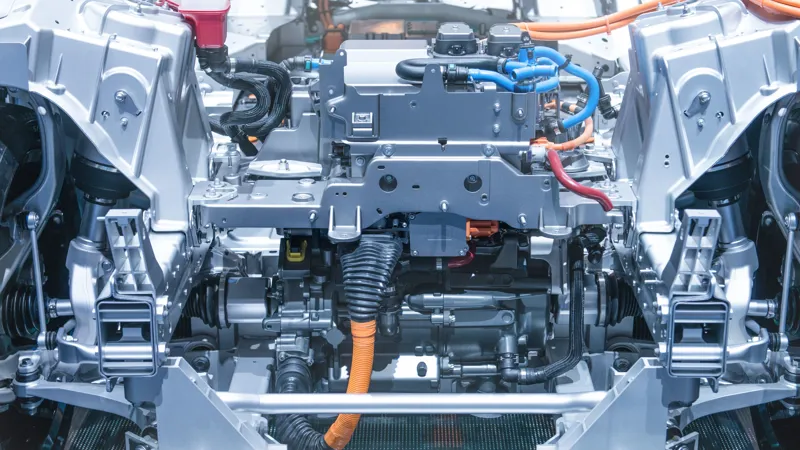
UK-based Altilium is working with ABB to enhance its battery recycling operations ahead of a planned Teesside facility that could process waste from over 150,000 EVs per year.

Altilium develops cathode and anode battery materials from waste streams such as lithium scrap and mine spoil. In 2022, the company opened its EV Battery Recycling Technology Centre in Devon, while it also operates a larger scale site in Eastern Europe – the European Solvent Extraction-Electrowinning (SX-EW) facility – that will be capable of recycling battery waste from over 24,000 vehicles annually.

Working with ABB, Altilium plans to scale up operations at SX-EW, integrating automation and electrification, as well as trialling digital technologies such as ABB’s Manufacturing Operations Management (MOM) and Manufacturing Execution System (MES) at the plant. SX-EW is due to start processing waste in 2024.

Longer term, Altilium plans to incorporate ABB’s technology into its planned Teesside plant, due to open in 2026. According to Altilium, that facility could produce up to 20 per cent of the UK’s cathode active material (CAM) requirements, making it one of Europe’s largest battery recycling sites.

“Teaming up with ABB aligns perfectly with our commitment to redefine battery recycling for clean energy transportation,” said Altilium co-founder, Dr Christian Marston. “This is just the beginning of our journey toward closing the loop in battery manufacturing and decarbonising automotive supply chains.”

According to the World Economic Forum, demand for batteries is expected to increase 14-fold by 2030, driven largely by the adoption of electric vehicles. Sustainable supply chains for battery materials are therefore one of the biggest challenges presented by the EV transition.

ABB is already working with fellow Swedish firm Northvolt to electrify the latter’s Revolt Ett battery recycling facility, which is designed to process 125,000 tons of end-of-life batteries per year. Altilium’s Teesside plant will be on a slightly smaller scale, but is still predicted to produce around 30,000 metric tons of CAM per year.

“By combining our expertise in automated control systems, electrification and digital technology with Altilium’s approach to battery recycling, we are well positioned to drive positive change in the EV industry,” said Staffan Sodergard, Global Product Line Manager for Battery Manufacturing, ABB. “This is an important agreement in the vital and growing field of battery recycling, where ABB continues to build expertise with ambitious battery industry customers and partners.”

ABB to help Northvolt electrify battery recycling

ABB to help Northvolt electrify battery recycling

Swedish industrial firms ABB and Northvolt are to extend their existing partnership by working together to electrify Northvolt’s Revolt Ett battery recycling facility.

Located in northern Sweden, Revolt Ett is a project to massively reduce the environmental impact of lithium-ion battery production, using recycled materials from used cells. Northvolt and ABB said the facility will eventually process 125,000 tons of end-of-life batteries and battery production waste each year, claimed to be the highest volume in the world. The reprocessed materials will then be used as a manufacturing input in the collocated Northvolt Ett gigafactory, which ABB has been partnered on with Northvolt since 2017.

ABB will now work with Northvolt to further enhance the green credentials of Revolt Ett, delivering switchgears and variable speed drives to the facility, which will match the speed of the processes taking place in the factory, ramping power up and down as required, saving energy, and boosting performance.  According to Northvolt, Revolt Ett will help the company reduce the carbon footprint of its batteries to 10kg CO2e per kilowatt hour by 2030, compared to a current industry reference of 98kg CO2e per kilowatt hour.

Error loading Partial View script (file: ~/Views/MacroPartials/CaptionedImage.cshtml)”Batteries are a critical technology within the energy transition,” said Emma Nehrenheim, chief environmental officer at Northvolt. “But with massive growth in battery demand it is critical that we secure solutions to recycle batteries and ensure reliable, sustainable supply of critical minerals. This new facility Revolt Ett will help us achieve both of these goals as we work towards our mission of building the world’s greenest battery.”

As increasing numbers of lithium-ion batteries reach end of life, Revolt Ett’s battery materials recovery and hydrometallurgical (hydromet) process is set to supply up to 50 per cent of Northvolt Ett’s raw material needs for lithium, nickel, cobalt and manganese by 2030. By that point, Northvolt aims to have the capacity to manufacture 150 GWh per annum across its operations in Sweden and Germany.

“This is ABB’s first order within the strategically important battery recycling segment,” said Staffan Södergård, business unit manager, Battery Manufacturing, Process Industries, ABB. “In conjunction with a trusted partner in Northvolt, this project offers us the opportunity to help our customers avoid carbon emissions, reuse material and protect critical supply chains. We look forward to its progress.”

Search for products

Back to Top
Product has been added to your cart
phone: +86 15860624505
to whats
15860624505
to whats
15860624505
email: 481340442@qq.com